
Walmart and Sam’s Club are two titans in the retail industry, yet many consumers and business owners alike often wonder about the relationship between these two brands. The central question that looms large is this: Does Walmart own Sam’s Club? While the similarities between Walmart’s everyday low prices and the bulk savings offered by Sam’s Club create a natural connection, the intricacies of their ownership and operational structure tell a deeper story. Understanding how Walmart’s business model intertwines with that of Sam’s Club can offer insightful perspectives for business owners looking to optimize their purchasing strategies. Moreover, exploring this relationship not only clarifies the dynamics of retail competition but also highlights the vast ecosystem that Walmart has cultivated over the years. This article aims to dissect these connections and shed light on the implications for businesses and consumers alike, as we navigate this fascinating retail landscape. If you’re interested in maximizing your savings and understanding the value of your purchases, be sure to learn more about maximizing your experience at Sam’s Club and discovering membership benefits.
Key Points about Walmart’s Ownership of Sam’s Club
-
Foundation and Establishment: Walmart was founded by Sam Walton in 1962. As part of its expansion strategy, it established Sam’s Club in 1983 as a membership-only warehouse club to compete primarily with others in bulk retailing, like Costco. This model allows purchasers, particularly small businesses, to buy wholesale products at discounted rates.
-
Ownership Structure: Walmart Inc. is an American multinational corporation that operates various retail formats, including discount stores, grocery stores, and warehouse clubs like Sam’s Club. The Walton family retains a significant majority stake in Walmart, influencing strategic decisions that affect both Walmart and Sam’s Club. This ownership enables Walmart to leverage its resources for operational efficiencies.
-
Operational Synergies: Sam’s Club benefits from Walmart’s vast operational network, including supply chain management and cost-saving strategies. This alliance can allow Sam’s Club to offer lower prices compared to competitors by utilizing the same suppliers and distribution systems as Walmart.
-
Member-Only Model: Sam’s Club operates under a membership-only model, which requires customers to pay a fee to shop there. This structure not only boosts customer loyalty but also ensures a steady revenue stream from membership fees, allowing for competitive pricing within the retail market.
-
Business Implications for Owners: Understanding Walmart’s ownership structure can help business owners leverage the advantages offered by Sam’s Club, such as bulk purchasing and lower prices on a wide variety of goods. Additionally, the operational efficiencies seen at Walmart can inspire similar strategies among independent retailers.
-
Expansion and Adaptation: Over the years, both Walmart and Sam’s Club have continuously adapted to changing market dynamics, striving for innovation and efficiency. The evolution of e-commerce has also influenced their operations, along with the necessity for physical stores to enhance customer experience. Learn more about maximizing your experience at Sam’s Club.
-
Market Presence: With thousands of locations across the U.S. and a solid international presence, Sam’s Club plays a vital role in Walmart’s overall strategy to capture diverse market segments, including both individual consumers and small businesses. Additionally, understanding market trends is crucial for owners looking to optimize their buying strategies at such organizations as highlighted in maximizing your value at Sam’s Club.
These key points underlie the integral relationship between Walmart and Sam’s Club, emphasizing how their partnership creates value and various opportunities for business owners.
History of Walmart
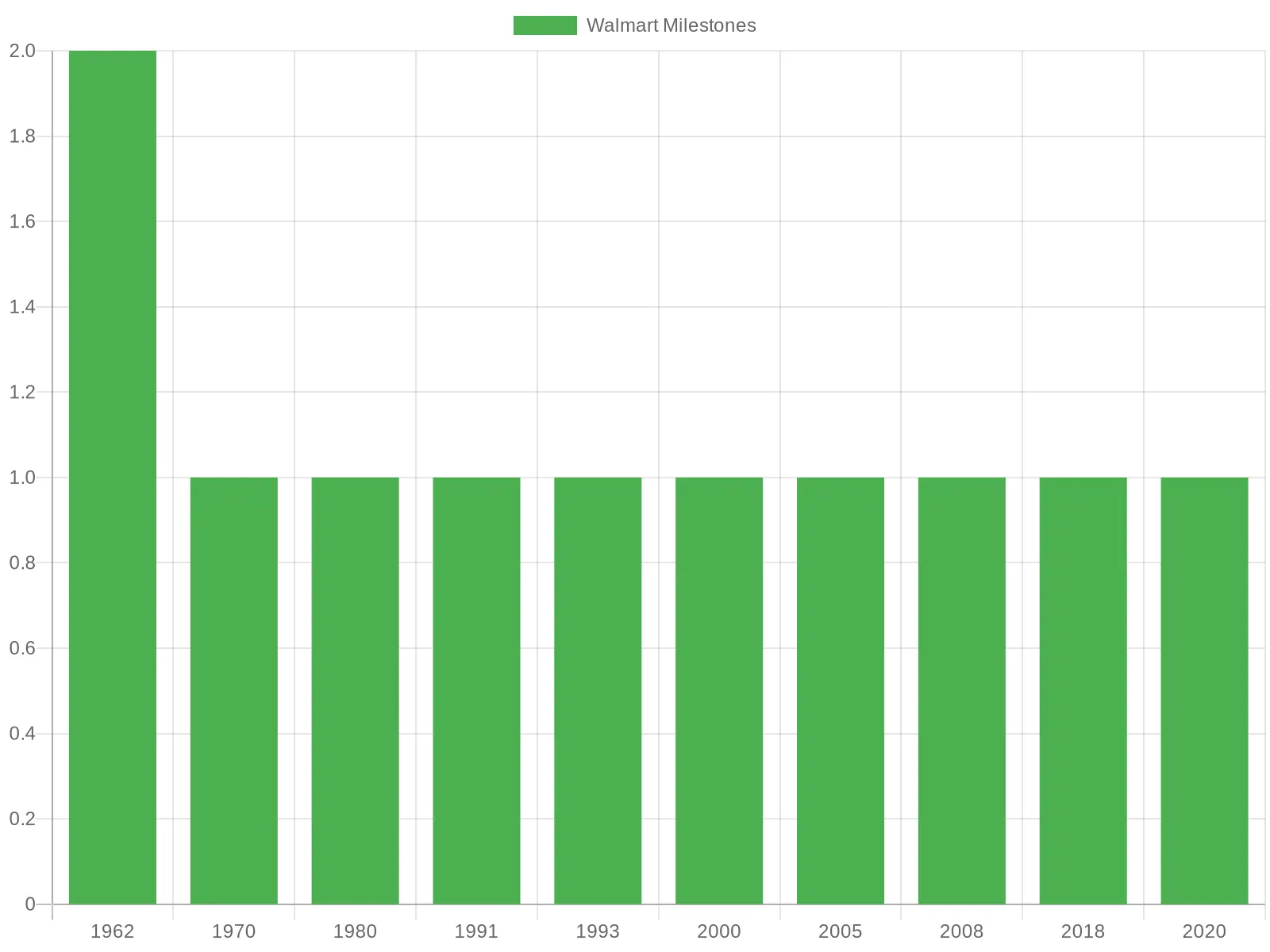
Walmart, founded by Sam Walton on July 2, 1962, in Rogers, Arkansas, has become a staple name in the retail industry. Walton opened the first Walmart store in Bentonville, Arkansas, prioritizing low prices and customer service. The company quickly revolutionized retail practices by focusing on operational efficiency and a customer-centric business model.
Key Milestones:
- In 1970, Walmart became publicly traded, marking its entrance to the stock market.
- By 1980, Walmart achieved annual sales of $1 billion, making history in rapid sales growth.
- The first international Walmart store opened in Mexico in 1991, highlighting its global expansion strategy.
- In 1993, Walmart was officially added to the Fortune 500 list, paving the way for its eventual growth into an international retail giant.
- In 2000, Walmart launched its online shopping platform, Walmart.com, representing a significant shift towards e-commerce.
- The company rebranded as Walmart Inc. in 2018, reflecting a strategic move to create a unified global brand.
Walmart currently operates over 10,000 stores globally, making it a dominant player in both physical and online retail environments. Learn more about Walmart’s history and milestones.
History of Sam’s Club
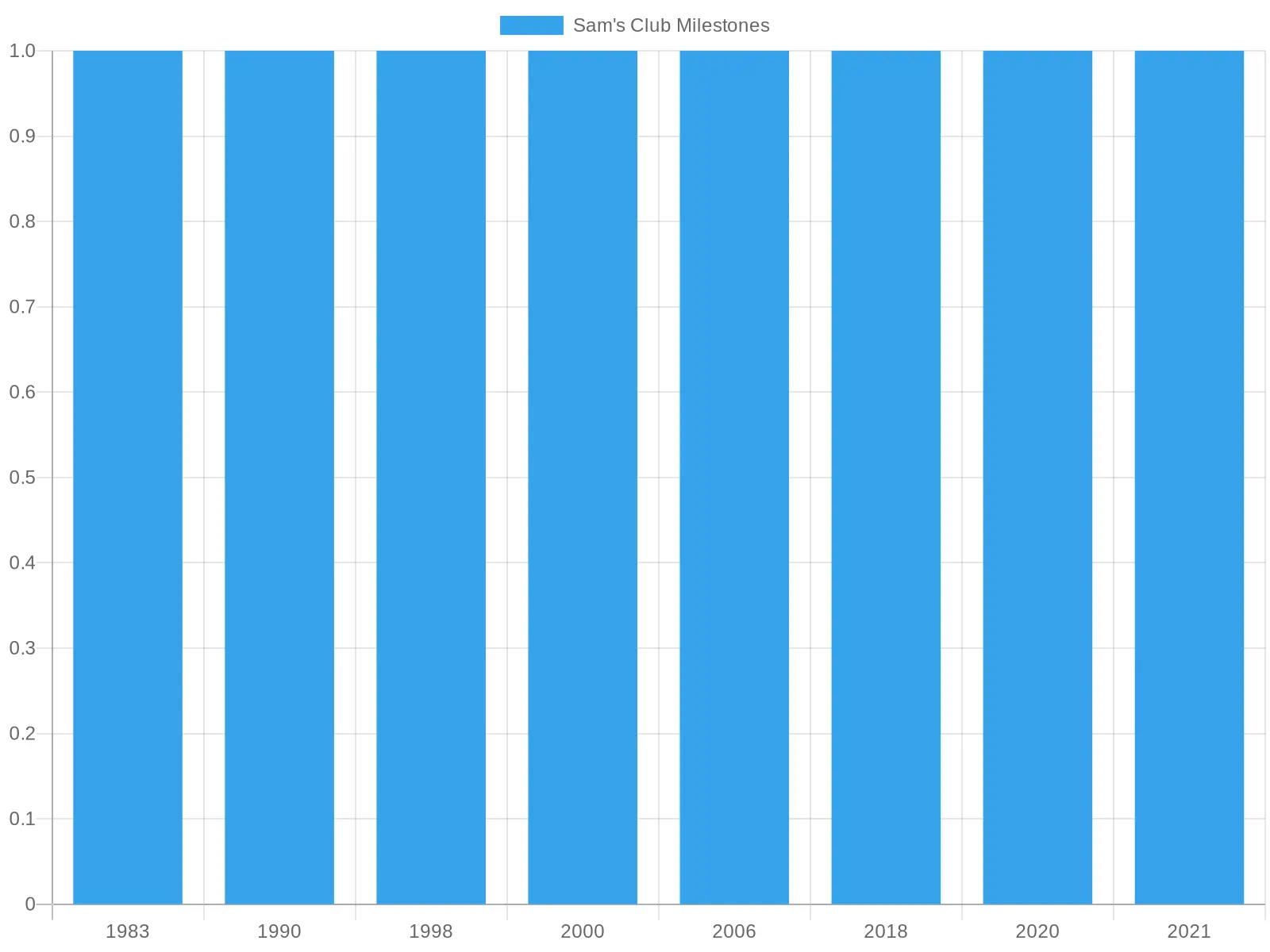
Sam’s Club, a subsidiary of Walmart, was established in 1983 as a wholesale club. The concept was inspired by the need for bulk purchasing options, initially showcasing a limited selection of items at discounted prices. Sam Walton envisioned this innovative shopping format to provide small businesses and consumers with cost-effective purchasing solutions.
Key Milestones:
- 1990 saw Sam’s Club expanding its locations across the United States, meeting the growing demand for wholesale shopping.
- After a few years of operation, Walmart acquired the remaining shares of Sam’s Club in 1998, fully integrating it as a subsidiary.
- The advent of online shopping began with Sam’s Club launching its platform in 2000 to enhance customer experience.
- In 2006, Sam’s Club introduced a “Plus” membership to offer enhanced benefits to its members, a response to customer feedback.
- By 2018, membership numbers surged to over 47 million, reflecting successful marketing and store redesigns.
- The expansion continued with new stores and online enhancements in 2020 as part of adapting to the digital retail environment.
Sam’s Club continues to thrive as a go-to destination for businesses and consumers alike, offering valuable savings through memberships and bulk purchasing. Explore the membership value for business owners.
Sam’s Club Performance Overview: 2023 Financial Insights
Sam’s Club, a subsidiary of Walmart, has exhibited significant growth activity throughout 2023. With an augmented focus on membership benefits and engagement, the company has reported an overall increase in revenue and memberships. Here are the key performance indicators for Sam’s Club:
Key Financial Performance Indicators
- Total Revenue: Sam’s Club generated approximately $85 billion in total revenue by the end of 2023, placing it among the top shopping memberships alongside Amazon Prime and Costco (The Daily Meal).
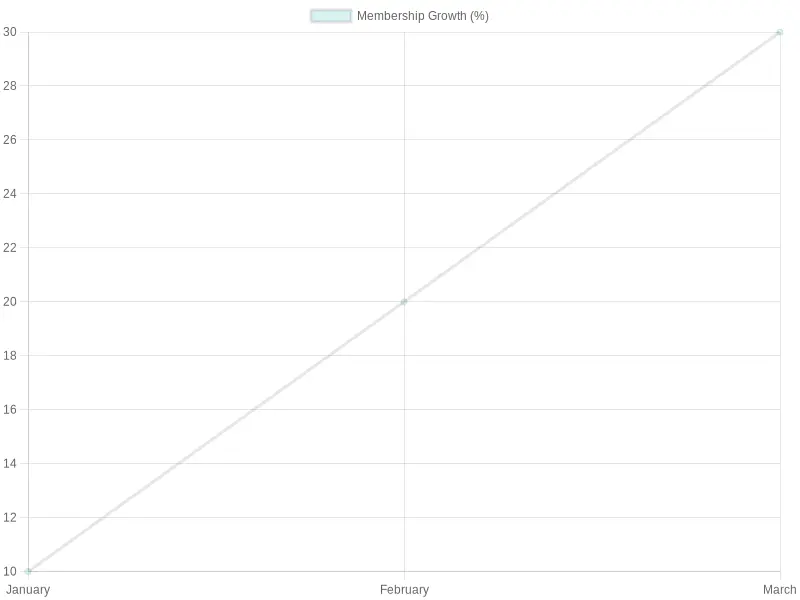
- Membership Growth:
- There was a 10% increase in membership counts, with the membership fee revenues growing by 6.1%. This is attributed to increased renewal rates and a surge in Plus memberships, reflecting a robust member engagement strategy (Yahoo Finance).
- Sam’s Club reported a strong initiative that attracted younger demographics, particularly Gen Z and Millennials, to join and participate in their community (Merca20).
Revenue Changes
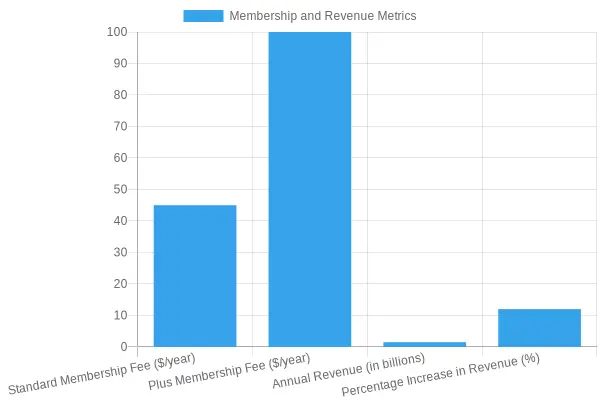
- Annual Revenue Growth: The company experienced a 12% increase in revenue from the previous year, marking an additional $1.5 billion in annual revenue (Statista).
- The operating income for the fiscal year was reported to be around $596 million, reflecting a 3.8% increase year-over-year (Yahoo Finance).
Membership Fees
- Standard Membership Fee: $45/year
- Plus Membership Fee: $100/year
Charts and Graphs
Sam’s Club continues to position itself strategically within the retail market, leveraging competitive pricing, promotional activities, and an enhanced shopping experience to attract new members and retain existing ones. To optimize your Sam’s Club experience, consider maximizing your value today!
With this impressive performance in 2023, Sam’s Club appears well-poised for continued growth and expansion in the years to come, adapting to both market conditions and consumer preferences.
Comparing Walmart’s Business Model with Sam’s Club
Walmart and Sam’s Club both operate under the parent company, Walmart Inc., yet their business models reflect distinct strategies tailored to their target markets. Understanding these differences can offer valuable insights for business owners looking to navigate the retail landscape effectively.
Pricing Strategy
-
Walmart: Walmart is known for its everyday low pricing strategy. The company maintains a significant focus on offering competitive prices across a wide range of products, from groceries to electronics. This strategy is intended to attract a broad customer base, emphasizing convenience and value. Walmart’s revenue in fiscal year 2023 surpassed $600 billion, with groceries representing over 60% of its U.S. sales (Britannica).
-
Sam’s Club: In contrast, Sam’s Club employs a membership-based model, where customers pay an annual fee to gain access to wholesale prices on bulk items. This model is designed to attract budget-conscious consumers and small businesses. The focus on savings and value is evident through the various promotions available for members, such as same-day delivery options and bulk purchase discounts (Sam’s Club).
Target Demographics
-
Walmart: Walmart serves a diverse customer base, including families, individuals, and businesses. The company targets customers who value convenience and affordability. With its extensive product range and accessible locations, Walmart aims to meet the shopping needs of everyday consumers.
-
Sam’s Club: Sam’s Club primarily targets a more niche audience of members, including small business owners and value-seeking consumers who prefer buying in bulk. The membership model is attractive to those who are willing to pay for exclusive access to lower prices on high-volume purchases.
Store Formats
-
Walmart: Walmart operates a variety of store formats, including supercenters, discount stores, and neighborhood markets, catering to different shopping preferences and demographics. This flexibility allows Walmart to maintain a widespread presence in both urban and rural areas.
-
Sam’s Club: Sam’s Club stores are structured as warehouse clubs, focusing on bulk items and limited selection per category to keep costs low. The layout is designed for high-volume sales, which differentiates it from traditional retail stores.
In summary, while both Walmart and Sam’s Club share a common ownership and goal of providing value to consumers, their methods and target markets differ significantly. Walmart’s widespread, low-price strategy contrasts with Sam’s Club’s membership-driven, bulk purchasing model. For business owners, understanding these distinctions can highlight opportunities within the retail sector, whether through competitive pricing or catering to specific consumer needs.
For further insights on maximizing your shopping experience at Sam’s Club, check out this guide.
| Category | Walmart | Sam’s Club |
|---|---|---|
| Number of Locations | Exceeds 4,700 locations in the US | Approximately 600 locations in the US |
| Membership Fees | No membership fee required for shopping | Membership fees typically around $45-$100 for various tiers |
| Annual Revenue | Approximately $648 billion in 2023 | Revenue less specific, contributes significantly from membership fees and bulk sales |
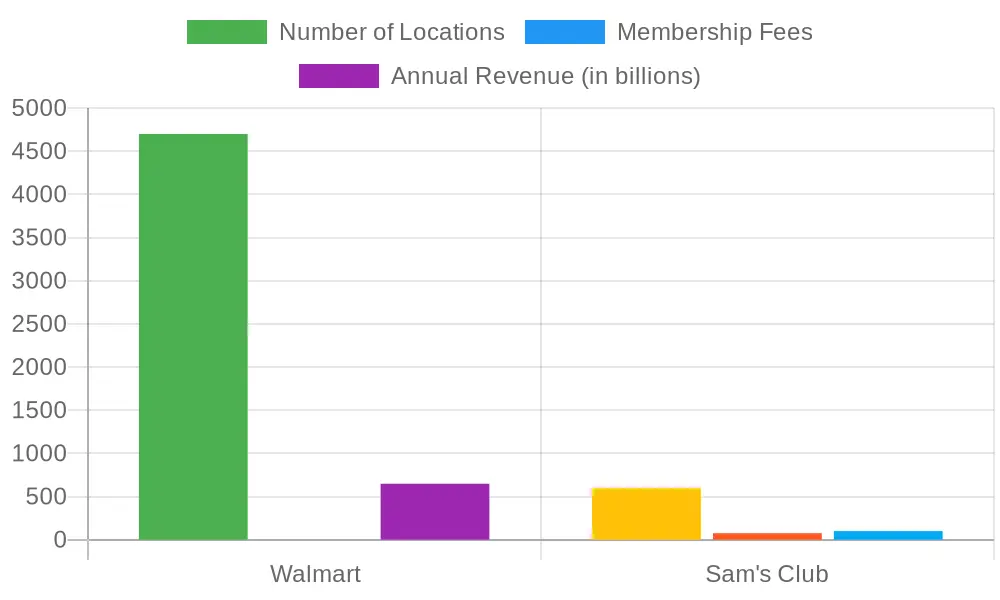
Sources: Walmart Number of Locations, Sam’s Club Number of Locations, Walmart Membership Fees, Sam’s Club Membership Fees, Walmart Annual Revenue, Sam’s Club Annual Revenue.
Expert Insights on Walmart and Sam’s Club
“Walmart’s membership model through Sam’s Club not only supports their competitive pricing strategy, but also drives customer loyalty by offering tangible savings for families and businesses alike.”
Sam’s Club, as a membership-only retailer, leverages the extensive supply chain and negotiation power of Walmart to provide affordable prices. Furthermore, the simplicity of their wholesale model allows for better planning and budgeting for businesses. Learn more about how to maximize your shopping experience at Sam’s Club.
Illustration showing Walmart’s ownership of Sam’s Club and their membership model.
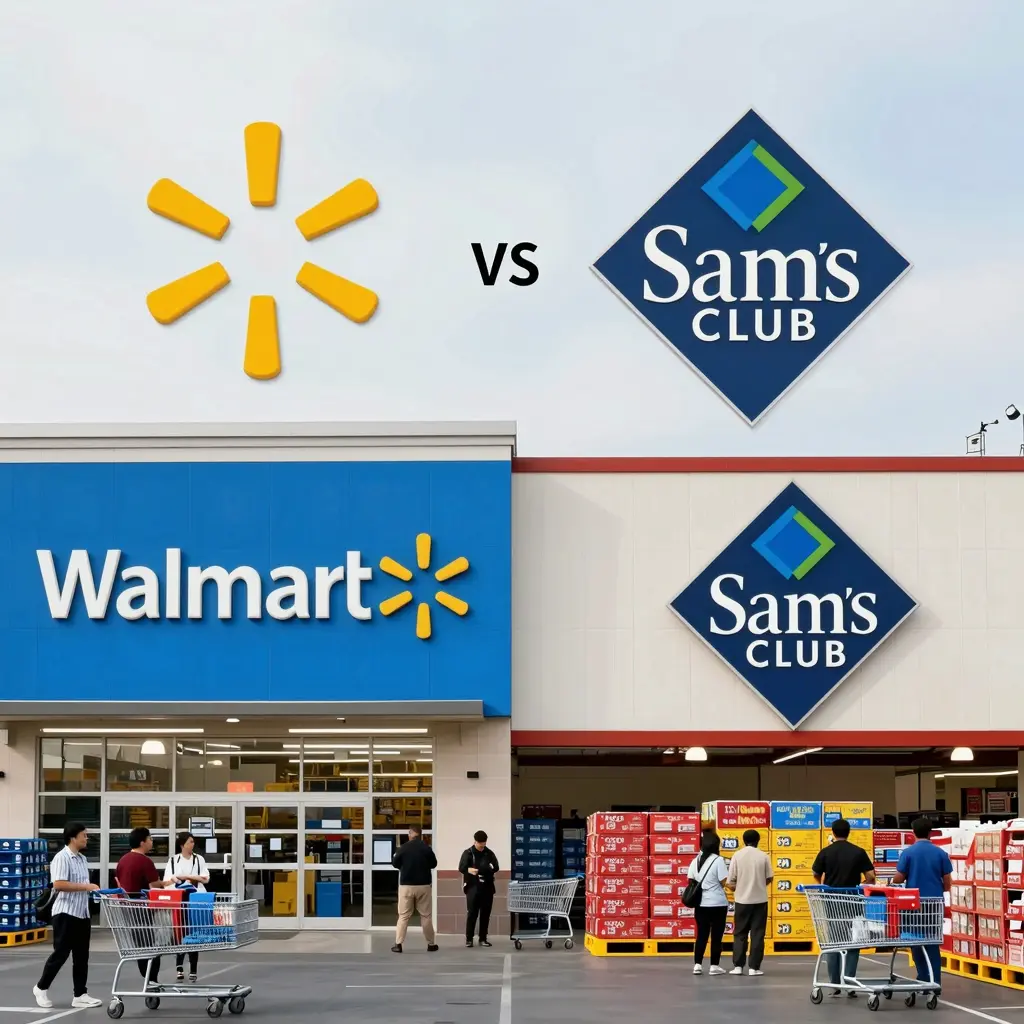
This image represents the competitive landscape between Walmart and Sam’s Club, showcasing their contrasting store fronts, logos, and symbols of competition.
For business owners, understanding the dynamics between these two retail giants is essential for making informed decisions. Learn more about maximizing your experience at Sam’s Club to leverage the benefits they offer.
Conclusion
In summary, Walmart’s ownership of Sam’s Club plays a pivotal role in shaping the retail landscape, especially for business owners. With wholesale pricing strategies, bulk purchasing advantages, and tailored services for small businesses, Sam’s Club offers a robust platform for entrepreneurs looking to optimize their operations and reduce costs. The membership model not only facilitates access to significant savings on essential supplies but also aligns with Walmart’s expansive marketing initiatives that enhance the member experience.
Moreover, the implications of Walmart’s influence cannot be understated. Smaller retailers may need to strategically navigate this competitive environment as they contend with the economies of scale that large corporations like Walmart can offer. As business owners consider their own procurement strategies, leveraging the benefits of a Sam’s Club membership can be a path to greater efficiency and cost-effectiveness. For more insights on enhancing the value of your Sam’s Club membership, check out this resource.
Ultimately, evaluating the operational strategies in response to Walmart’s ownership of Sam’s Club can provide business owners with a competitive edge in today’s dynamic marketplace. Consider exploring how such memberships might serve your business goals effectively.
Conclusion: Join the Membership Revolution!
Walmart’s acquisition of Sam’s Club underscores the growing importance of membership clubs in today’s business landscape. These clubs are not just about savings-they offer exclusive access to products, bulk purchasing options, and tailored services that can significantly impact a business’s bottom line. For entrepreneurs and business owners, understanding the dynamics of membership can unlock new opportunities for growth and efficiency.
If you’re interested in maximizing your business’s potential through membership clubs, take the next step! Explore how Sam’s Club can become a vital partner in your business journey by checking out resources on maximizing your shopping experience at Sam’s Club. Discover the advantages and strategies that membership provides to businesses, and see how you can leverage these benefits for better savings and superior products. Join the ranks of savvy business owners who harness the power of membership clubs for greater success!